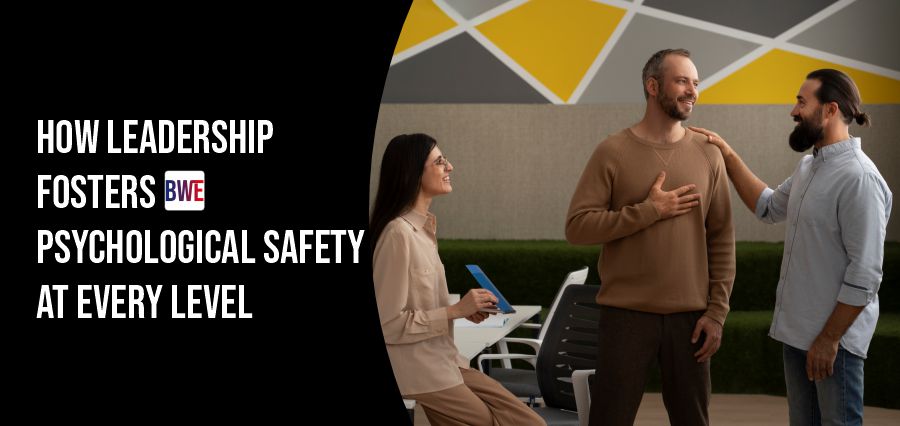
Psychological safety describes an environment where people feel safe to speak up without fear of embarrassment or punishment. Employees want confidence that they can share ideas, raise concerns, and take thoughtful risks. When this safety exists, teams communicate more openly, creativity increases, and engagement rises. When it is missing, silence takes over. Mistakes stay hidden. Problems grow quietly until they become expensive.
This is not only a human resource concept. It is a leadership competency tied directly to performance, retention, innovation, and wellbeing. Psychological safety must be built with intention across every level of a company.
Leaders shape culture with actions, not memos. A manager who listens, admits mistakes, and welcomes feedback signals that honesty is acceptable. A leader who reacts defensively teaches employees to stay quiet.
Every leader influences safety through:
Even a small comment can encourage risk taking or silence. Leaders must understand that sensors are always on. Employees watch everything. Because of that, leadership behavior must make safety visible every day.
Psychological safety is built on four pillars. Each reinforces trust and creates a foundation for healthy communication.
People need to feel seen and respected. When opinions are dismissed or marginalized, safety disappears. Inclusive leadership behaviors encourage participation from all groups and personalities.
Teams thrive when mistakes become learning opportunities. Punishment for honest errors drives secrecy. Leaders set expectations for learning. Language like What did we learn and How can we improve together helps create forward momentum.
Employees should feel free to challenge ideas without personal attack. Leaders must invite questions and reward constructive disagreement. Silence signals avoidance, not harmony.
Innovation requires experimentation. People need permission to explore without guaranteed success. A psychologically safe environment enables that experimentation.
Leaders rarely intend to harm confidence. Yet subtle behavior can create fear. For example:
A pattern of negative reactions teaches employees to protect themselves. Leaders must increase awareness of their habits and identify moments where others may experience silence as safer than honesty.
These practices build trust across an organization. They are concrete and repeatable.
Ask team members for perspectives during meetings. Pause to allow time for reflection. Encourage those who speak less often. The goal is balanced participation rather than domination by a few voices.
Leaders can say I made a mistake or I need help with this decision. This signals that perfection is not expected. Vulnerability encourages reciprocity. When the leader goes first, the team follows.
Stay solution focused. Ask questions rather than assign blame. When an error occurs, shift from punishment to investigation. Ask What conditions allowed this mistake to happen and then improve those conditions.
Psychological safety does not eliminate accountability. Employees need clarity about quality, deadlines, and responsibilities. Safety flourishes when expectations are understood and fair.
Feedback delivered respectfully and regularly becomes routine rather than threatening. Normalize coaching conversations during check-ins rather than waiting for performance reviews.
Senior leaders can endorse psychological safety, but middle managers experience the daily realities of employee interaction. They translate strategy into lived experience. Here is where safety succeeds or fails.
Middle managers need support through:
When middle leaders lack confidence or authority, they may default to control and compliance. That behavior undermines safety. Empowerment at this level is essential.
Frontline employees interact directly with customers and systems. Their insights often illuminate hidden risk. Psychological safety at this level ensures operational problems surface quickly.
Practical steps:
Many organizations fail because frontline voices remain unheard. Safety multiplies when every worker feels comfortable raising a flag early.
Leaders must measure psychological safety just like any performance metric. Measurement can reveal blind spots.
Useful approaches include:
Encourage employees to share how comfortable they feel expressing disagreement. Treat measurement data as learning opportunities rather than judgments.
Just asking the questions signals that voices matter.
Remote work creates psychological distance. Leaders must compensate intentionally.
Effective remote practices include:
Encourage informal conversation time. Remote workers often fear being perceived as disengaged. Leaders should check intent before judgment and provide opportunities for connection.
Conflict is unavoidable. When handled well, it strengthens trust. Leaders should:
A psychologically safe conflict conversation leaves people feeling respected and heard. That experience builds confidence that future conflict can be managed productively. Employees will speak up sooner when problems arise.
Organizations that prioritize psychological safety experience measurable outcomes:
These outcomes are not accidental. They grow from habits formed over time. Leaders must protect psychological safety the same way they protect budgets or deadlines.
The reward is a culture where people contribute their best work without fear. When safety becomes part of daily leadership, trust compounds. That trust creates performance that competitors struggle to imitate.
Psychological safety is built through consistent effort, intentional leadership, and ongoing reinforcement. It doesn’t happen overnight—it grows when leaders foster trust through their actions, communication, and organizational practices. The strongest message a leader can convey is simple yet powerful: every voice is valued, every perspective is welcomed, and every individual deserves respect.
Real change begins not with a grand speech but with small moments of curiosity, empathy, and accountability. When leaders practice these behaviors consistently, psychological safety spreads. It becomes part of how people think, speak, and collaborate at every level.