Every technological era eventually encounters a question it can no longer ignore. For modern computing, that question is no longer how much faster machines can become, but how much longer existing systems can sustain the demands placed upon them. Artificial intelligence is expanding at an unprecedented pace, data centers consume enormous amounts of energy, and the digital infrastructure powering the modern world grows more complex with every passing year. Yet much of this progress continues to rely on technologies designed for a different age.
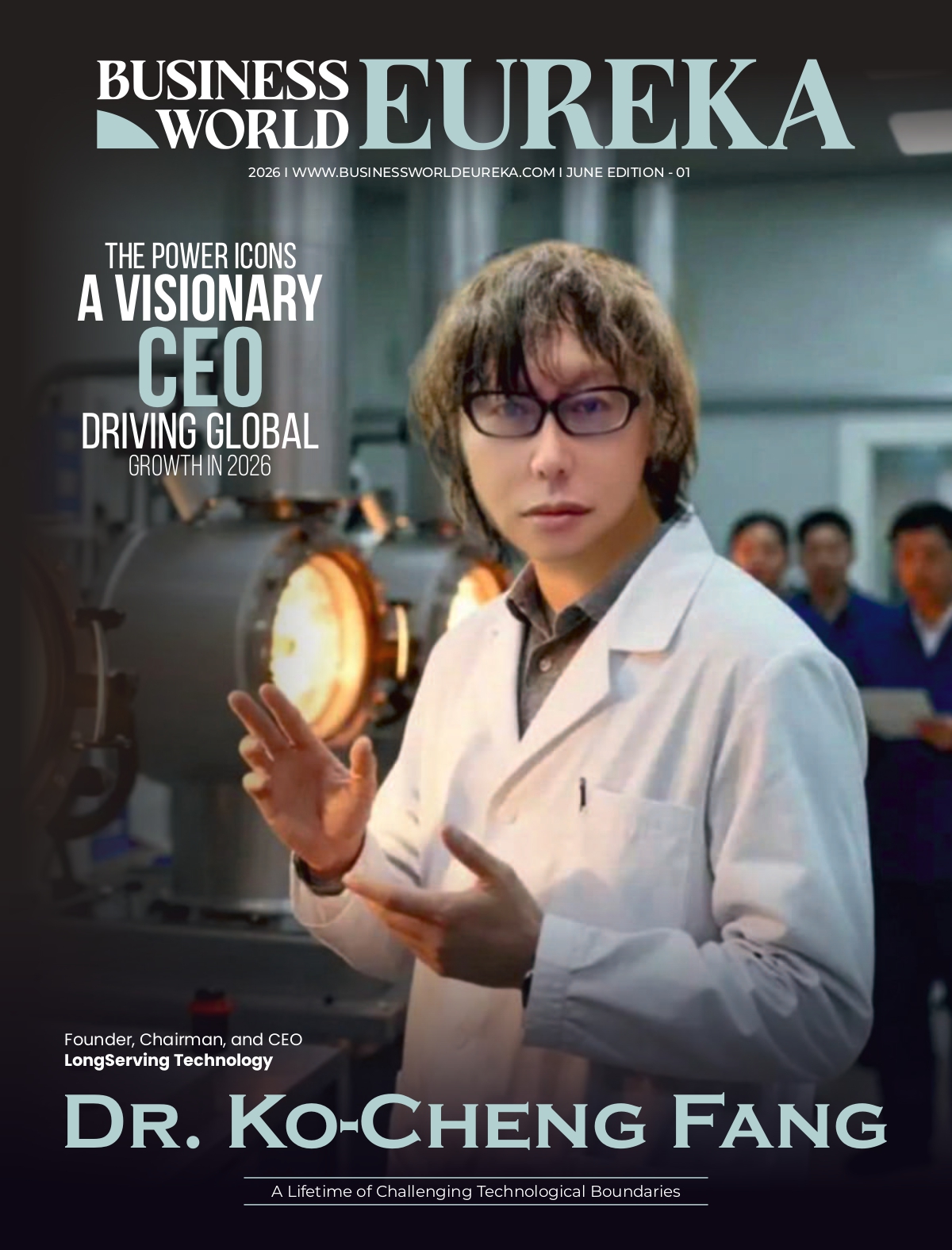
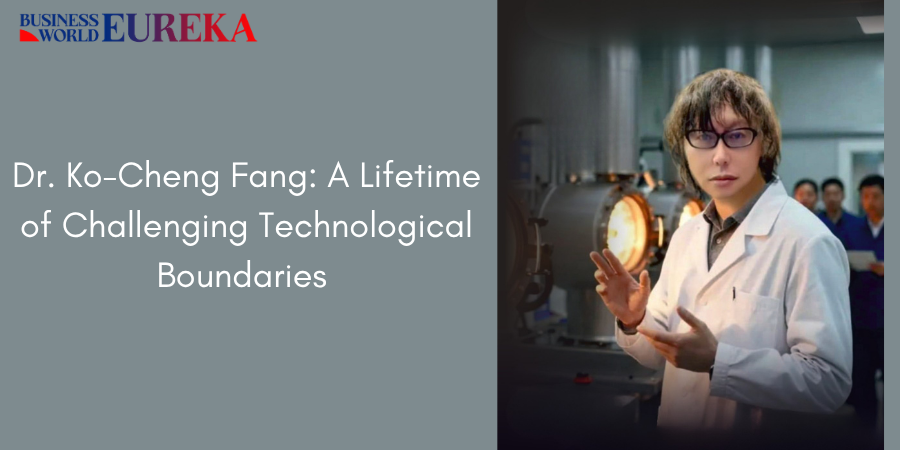
That philosophy lies at the heart of Dr. Ko-Cheng Fang’s work. As the Founder, Chairman, and CEO of LongServing Technology, he has dedicated his career to exploring technologies that exist beyond conventional boundaries. From pioneering photonic computing systems that harness light instead of electricity to advancing biotechnology, engineered gemstones, artificial intelligence, and advanced materials, his work reflects a belief that the future will be shaped by those capable of connecting disciplines rather than separating them.
A Journey Beyond Conventional Computing
Dr. Fang, Founder, Chairman, and CEO of LongServing Technology, is an inventor, entrepreneur, scientist, and artist whose work spans photonic quantum computing, artificial intelligence, robotics, biotechnology, and fine arts. He believes that meaningful innovation emerges when multiple disciplines are brought together to solve complex challenges.
His journey into the photonic chip industry was driven by a recognition of the limitations facing conventional semiconductor technology. As electronic chips encounter growing challenges related to scaling, power consumption, and heat management, Dr. Fang saw an opportunity to pioneer a new computing architecture that relies on light rather than electrical signals. This vision led to the development of LongServing Technology’s patented photonic chip technologies and X Photon materials, designed to simplify manufacturing processes while significantly improving computing efficiency and energy performance.
For Dr. Fang, innovation is not simply about advancing technology. It is about creating a new foundation for the future. Through photonic technologies, he aims to accelerate the evolution of artificial intelligence, quantum computing, and next-generation digital infrastructure while contributing to a more sustainable and intelligent world.
Where Science, Art, and Technology Converge
When Dr. Fang founded LongServing Technology in 2010, he had a vision to do more than just create a product or an industry. He believed that real innovation happens when you put disciplines together, rather than developing technologies in isolation.
Dr. Fang saw photonic chips, artificial intelligence, biotechnology and synthetic gemstones in different sectors, but with common foundations in materials science, optics, precision manufacturing and creative thinking. He learned through years of research and development that breakthroughs in one field could lead to breakthroughs in other fields. Photonic materials for next-generation chips could unlock entirely new applications, while precision fabrication techniques could enable innovations in biotechnology and advanced material development.
This realization reinforced his belief that the future belonged to organizations capable of linking together disparate fields of knowledge. Today, at LongServing Technology, Dr. Fang continues to combine science, engineering, and creativity to develop solutions that help push photonic computing, artificial intelligence, and sustainable innovation forward.
Recreating Nature’s Rarest Beauty
Dr. Fang’s pursuit of lab-grown jadeite stemmed from a deep reverence for the cultural significance and natural beauty of Imperial Green jadeite. He knew that good-quality jadeite was scarce and difficult to obtain, and he wanted to find a sustainable solution that would keep the qualities that collectors, artists, and jewelry lovers loved.
Dr. Fang has long been interested in the relationship between science and aesthetics as an inventor and artist. This curiosity led him to investigate whether it was possible to reproduce the geological processes that create jadeite in a laboratory, under controlled conditions. Based on research on crystal growth mechanisms, mineral composition, temperature, pressure and coloration factors, LongServing Technology has developed lab-grown jadeite with the translucency, chromium based green color, and durability associated with premium Imperial Green jadeite.
For Dr. Fang, the goal was never to make a simple copy. Instead, he imagined a new generation of engineered jadeite, produced by sophisticated scientific techniques. The company uses advanced crystal growth and materials engineering techniques at temperatures above 1,400 degrees Celsius to create extraordinary structural quality and visual beauty for high-end jewelry applications.
Sustainability was at the heart of this effort, too. With the natural sources of the gemstone becoming increasingly scarce, laboratory-grown jadeite offers an alternative that can reduce the dependence on mining, yet still meet the high standards of aesthetics and quality.
Powering the Next Computing Revolution
Dr. Fang believes that artificial intelligence and intelligent computing will be the most transformative beneficiaries of photonic chip technology over the coming decade. Just as semiconductor chips became the foundation of the Information Age, he sees photonic chips emerging as the driving force behind the next computing revolution.
While electronic chips have powered decades of technological advancement, they are increasingly constrained by power consumption, heat generation, signal interference, and data transfer limitations. As artificial intelligence models continue to grow in scale and complexity, these challenges become even more significant.
Photonic chips offer a fundamentally different approach by utilizing photons instead of electrons for information transmission and computation. Because light travels at extremely high speeds and is naturally resistant to electromagnetic interference, photonic systems have the potential to dramatically improve computational performance while reducing energy consumption.
Dr. Fang believes artificial intelligence will experience the most immediate impact. The immense computational demands of modern AI systems require hardware capable of delivering greater efficiency and performance. Photonic computing could help overcome the limitations of conventional architectures, accelerating the development of more advanced AI systems.
His vision extends beyond individual photonic components. Through LongServing Technology, Dr. Fang aims to establish a complete photonic computing ecosystem that includes photonic chips, photonic pathways, photonic logic architectures, advanced materials, and future photonic memory technologies. By minimizing the need for repeated conversions between light and electricity, this ecosystem seeks to maximize efficiency throughout the computing process.
Beyond AI, he anticipates significant applications in cloud computing, data centers, robotics, industrial automation, scientific research, and communication technologies. He believes photonic computing represents a pathway toward faster, more sustainable, and highly integrated digital infrastructure for the future.
The Innovation with the Widest Reach
Among the many inventions and technologies he has pursued, Dr. Fang considers photonic chip technology to hold the greatest potential for transforming everyday life. While biotechnology, artificial intelligence, environmental solutions, and advanced electronics all play important roles, he views photonic computing as a foundational technology capable of influencing nearly every aspect of modern society.
Today’s digital world depends on computing systems that support communication, healthcare, transportation, finance, education, and countless other sectors. As demand for computing power continues to grow, traditional electronic chips face increasing challenges related to efficiency and scalability.
Dr. Fang believes photonic chips offer a solution by enabling dramatically faster processing speeds and improved energy efficiency through the use of photons rather than electrons. Such advancements could strengthen artificial intelligence, improve healthcare research, enhance communication systems, and support more sustainable digital infrastructure.
He also sees indirect benefits in fields such as medical research, where advanced computing platforms can accelerate data analysis, biological modeling, and treatment discovery. Additionally, the improved energy efficiency of photonic systems could help reduce the environmental impact of rapidly expanding data centers and digital networks.
Although he emphasizes that future progress will depend on the integration of multiple technologies, Dr. Fang identifies photonic chips as the innovation with the greatest long term potential to shape human life and drive the next era of technological advancement.
Painting a Vision for Technological Breakthroughs
Dr. Fang’s artistic background plays a significant role in shaping his approach to technological innovation. His paintings, which blend traditional Eastern Gongbi techniques with Western realism and Impressionist influences, have cultivated a unique perspective that combines precision, creativity, and systems thinking.
The meticulous attention to detail required in Gongbi painting mirrors the precision needed in photonic chip design, where nanoscale accuracy and structural alignment are essential. This artistic discipline has strengthened his patience, focus, and commitment to process excellence in engineering and materials development.
At the same time, Western artistic traditions emphasize light, perspective, and dynamic expression. These concepts have influenced how Dr. Fang conceptualizes photonic systems, particularly since light itself serves as the foundation of photonic computing. His understanding of how light behaves visually has helped inform his thinking about optical pathways and signal optimization.
Art has also encouraged him to view challenges holistically. Just as a painting requires harmony among composition, color, balance, and contrast, technological systems must function as integrated architectures rather than isolated components. This perspective influences the way LongServing Technology develops photonic chips, memory systems, materials, and computing structures as interconnected solutions.
Perhaps most importantly, artistic creation has strengthened Dr. Fang’s capacity for creative problem solving and resilience. The process of refining a work of art through continuous experimentation and revision mirrors the realities of technological innovation, where breakthroughs often emerge through persistence, adaptation, and repeated improvement.
For Dr. Fang, art and technology are not separate pursuits. Together, they provide a powerful framework for imagining and creating the innovations that will define the future.
The Art of Exploring the Unknown
For Dr. Fang, the most important leadership principle is maintaining a balance between scientific rigor and long-term vision while encouraging disciplined exploration of the unknown. Working in emerging fields such as artificial intelligence, photonic computing, and biotechnology means operating in environments where uncertainty is unavoidable. Rather than seeking certainty, he believes leadership must be anchored in clarity of purpose.
Dr. Fang views a leader’s role not as eliminating uncertainty, but as creating a structured environment where uncertainty can be explored systematically. Every research direction, regardless of how ambitious, must be supported by scientific reasoning, measurable milestones, and continuous validation. Whether advancing photonic chips or pioneering biomedical applications, he emphasizes engineering discipline and experimental accountability.
At the same time, he believes true innovation requires the courage to pursue ideas that have not yet been proven. Breakthroughs cannot emerge if teams focus only on established knowledge. Therefore, he encourages open exploration within a disciplined framework where bold concepts are welcomed but ultimately tested through evidence.
Long-term thinking also remains central to his philosophy. Recognizing that transformative technologies often require years or even decades of development, Dr. Fang measures success not by short-term outcomes but by accumulated knowledge, technical depth, and incremental breakthroughs that contribute to lasting progress.
Recognition as a Global Responsibility
Receiving an honorary doctorate from International American University and earning awards at prestigious invention exhibitions in Geneva, Warsaw, and Taipei strengthened Dr. Fang’s belief that innovation should be developed with a global perspective from the outset.
Rather than viewing these achievements as personal milestones alone, he sees them as evidence that interdisciplinary innovation can transcend geographical, scientific, and cultural boundaries. These recognitions reinforced his commitment to pursuing long term, high impact research while demonstrating that groundbreaking ideas can gain appreciation and validation from the international community.
As a result, Dr. Fang positions LongServing Technology not as a regional enterprise but as a global innovation platform focused on next-generation computing, photonic systems, and advanced materials. His vision emphasizes international collaboration, interdisciplinary research, and active participation in the worldwide innovation ecosystem.
The acknowledgment received from different countries has also encouraged LongServing Technology to engage more closely with international partners, research institutions, and industry leaders. Through these collaborations, Dr. Fang aims to ensure that the company’s technologies can be developed, validated, and applied on a truly global scale.
The Shared Science of Beauty and Computation
Although synthetic gemstones and photonic chips may appear to belong to entirely different industries, Dr. Fang sees them as deeply connected through a common foundation in materials science and precision engineering.
At the heart of both fields lies a philosophy that structure determines function. Whether creating a gemstone of exceptional beauty or a photonic chip capable of advanced computation, success depends on controlling matter at microscopic and even atomic scales.
In developing laboratory grown jadeite, Dr. Fang and his team study crystal formation, mineral composition, temperature, and pressure to recreate geological processes within controlled environments. The objective is to achieve specific optical characteristics, including translucency, coloration, and structural integrity, through precise material engineering.
Photonic chip development follows a remarkably similar scientific approach. Instead of focusing on aesthetics, researchers manipulate materials at micro and nanoscale levels to control the behavior of light within complex circuits. The goal is to guide photons efficiently through carefully designed pathways that enable high speed computing with minimal energy loss.
Dr. Fang also identifies a deeper connection through the concept of simulating natural processes. In gemstone synthesis, geological formation is recreated under laboratory conditions. In photonic systems, scientists model the behavior of light and quantum interactions. In both cases, nature serves as the blueprint while technology provides the means to replicate and extend its principles.
The New Era of Gemstone Excellence
Dr. Fang acknowledges that introducing laboratory-grown jadeite into a market shaped by centuries of tradition and cultural significance presents both ethical and commercial challenges.
One of the primary obstacles is perception. For many consumers, the value of natural gemstones extends beyond appearance and includes rarity, history, symbolism, and the geological journey that formed them over millions of years. As a result, laboratory-grown alternatives may initially be viewed as lacking the authenticity associated with natural stones.
To address this challenge, Dr. Fang emphasizes the importance of education and transparent communication. He believes consumers should understand that value can be derived not only from rarity but also from scientific achievement, sustainability, and technological innovation.
Ethical transparency is equally important. Dr. Fang strongly advocates for clear differentiation between natural and laboratory-grown gemstones through accurate labeling and responsible industry practices. Maintaining consumer trust, he believes, is essential for the long-term credibility of the entire sector.
He also recognizes that laboratory grown gemstones may reshape traditional supply chains built around mining, trading, and certification. As the market evolves, stakeholders will need to adapt to new realities and changing consumer preferences.
Perhaps the most significant shift involves redefining value itself. While natural gemstones have historically been valued based on rarity, laboratory grown gemstones encourage a broader evaluation that includes craftsmanship, quality, sustainability, design, and technological accomplishment.
The Future of Human Centered Healthcare
Dr. Fang anticipates a transformation in healthcare over the next fifteen years due to the convergence of artificial intelligence, robotics and biotechnology. But he doesn’t see technology taking over human decision making. Instead, he envisions a future where human expertise and intelligent systems will work together.
Artificial intelligence and robotic technologies will take over more and more tasks of high precision, repetition and data analysis. Systems that can analyze information at a scale far beyond human capabilities will be valuable for applications such as disease detection, interpretation of medical images, patient monitoring, and surgical assistance.
But Dr. Fang says that even with these advances, human autonomy will continue to be essential. Ethical judgment, emotional understanding and contextual decision making are central to healthcare and cannot be replicated by technology. To him, medicine will always be a person-centered discipline.
Hence the future healthcare model will be a combination of both strengths. Artificial intelligence will be used to provide recommendations, predictive insights and simulations but physicians will still have the final say in decision making. This collaboration will free up medical practitioners to focus on critical thinking and patient care, rather than mindless paperwork.
“I also expect major advances in antiviral biotechnology,” said Dr. Fang. Pairing biotech with AI-based modeling will allow scientists to speed up the discovery of antiviral compounds and react faster to new biological threats. These capabilities could greatly enhance the world’s preparedness for future health threats.
Robotics will also become increasingly important for elderly care, rehabilitation, surgery and healthcare logistics. These technologies can relieve the pressure on health systems and improve the consistency, accuracy and accessibility of care.
Medical autonomy will also change with patients having access to personalized health data and continuous monitoring tools. “Smart systems will be able to give real-time direction and early warnings, enabling people to take a more active role in their own health management.”
But Dr. Fang emphasizes that this transformation needs to be led by strong ethical principles. As healthcare continues to integrate with technology, issues of data privacy, algorithm transparency and clinical accountability will become more salient.
A Call to Asia’s Next Generation of Innovators
Dr Fang urges future entrepreneurs in Taiwan and in the rest of Asia to think beyond disciplinary and geographical boundaries. The most transformative innovations come from the intersection of fields like artificial intelligence, materials science, biotechnology and advanced computing, in his opinion.
He doesn’t think future innovators should specialize in one area, but rather gain the ability to weave together knowledge from different domains. Interdisciplinary thinking like this is going to be key in solving the complex challenges of tomorrow.
He also believes that patience is an essential principle. Deep technology innovations can take years of research, refinement, and perseverance before they are commercially mature. He therefore advises entrepreneurs not to be distracted from their long-term scientific and technological goals by short-term market pressures.
Dr Fang also highlights unique advantages that entrepreneurs across Asia can capitalise on. The region has a deep bench of engineering talent, manufacturing capabilities, and the ability to adapt to technology. Together with global cooperation and original innovation, these strengths provide opportunities to develop companies to compete on the global stage.
Choosing the Long Road to Innovation
Reflecting on LongServing Technology’s history since it was founded in 2010, Dr. Fang points to one decision that has been pivotal in determining the company’s path: a commitment to a long-term deep technology strategy from the outset.
Rather than pursuing immediate business opportunities or incremental improvements in existing markets, he opted to invest in basic research fields such as advanced materials, photonic systems and cross-disciplinary technologies that often take years to mature.
It was this mandate that made LongServing Technology an innovation platform based on research, not a regular technology manufacturer. It gave the freedom to pursue high risk high impact areas such as photonic chips, synthetic gemstones and biotechnology without being constrained by short term market cycles.
He focused on fundamental innovation and interdisciplinary integration to develop a vision that is beyond any single industry. He believes that this long-term commitment to pioneering technologies has been crucial in positioning LongServing Technology for global recognition and diversified technological advancement.