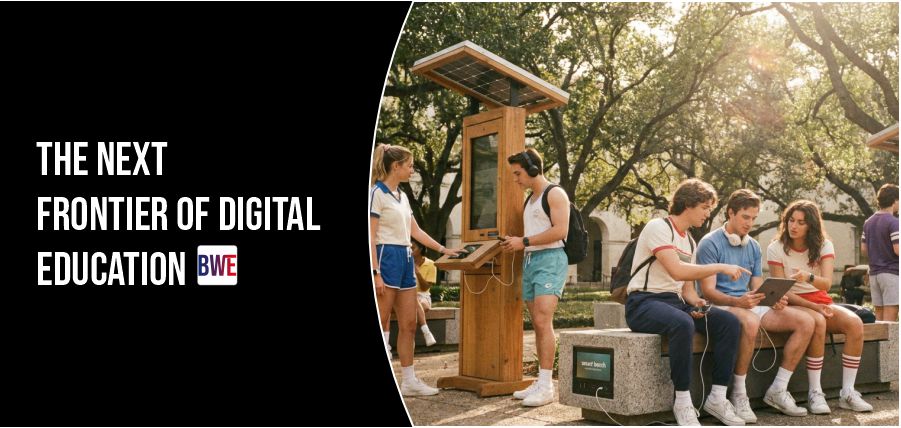
The digital transformation of education has progressed far beyond the simple adoption of online learning platforms and virtual classrooms. What began as the digitization of traditional educational resources has evolved into a far more interconnected and intelligent model of learning. Today, educational institutions, technology providers, educators, and learners are moving toward a new paradigm known as the smart learning ecosystem. This approach integrates technology, data, content, collaboration tools, and personalized learning experiences into a unified environment designed to support continuous growth and engagement.
As educational needs become more diverse and workforce expectations continue to change, smart learning ecosystems are emerging as the next frontier of digital education. They offer a framework that not only delivers knowledge but also adapts to individual learners, fosters collaboration, and creates meaningful pathways for lifelong learning.
Beyond Digital Classrooms
For many years, digital education focused primarily on transferring traditional classroom experiences into online environments. Learning management systems, video conferencing platforms, and digital content libraries helped expand access to education, but they often operated as separate tools with limited integration.
Smart learning ecosystems represent a significant evolution. Rather than functioning as isolated technologies, they bring together multiple educational components into a connected network. Students can access personalized learning materials, collaborate with peers, receive real-time feedback, and track their progress through a seamless experience. Educators, meanwhile, gain deeper insights into learner performance and engagement, enabling more informed teaching strategies.
The result is an educational environment that continuously adapts to the needs of both learners and institutions.
The Power of Personalization
One of the defining characteristics of a smart learning ecosystem is its ability to deliver personalized learning experiences. Traditional education models often follow a standardized approach in which all learners progress through the same material at the same pace. While effective for some, this method can leave others struggling to keep up or feeling insufficiently challenged.
Through artificial intelligence, machine learning, and advanced analytics, smart learning ecosystems can identify individual learning patterns, strengths, and areas for improvement. Educational content can then be tailored to meet specific needs, helping learners engage more effectively with the material.
Personalization extends beyond academic performance. Modern systems can adapt content formats, recommend additional resources, and suggest learning pathways aligned with individual interests and career goals. This level of customization creates a more engaging and meaningful educational experience.
Data as a Catalyst for Better Learning
Data plays a central role in the effectiveness of smart learning ecosystems. Every interaction within the learning environment generates valuable insights that can be used to improve educational outcomes.
Educators can monitor student engagement, identify potential learning gaps, and intervene before challenges become significant barriers to success. Institutions can analyze broader trends to improve curriculum design, resource allocation, and instructional strategies.
For learners, data-driven feedback provides greater visibility into their progress. Rather than waiting for periodic assessments, students can receive continuous guidance that supports ongoing improvement and motivation.
The ability to transform educational data into actionable insights is becoming one of the most powerful advantages of digital learning environments.
Artificial Intelligence and Intelligent Learning
Artificial intelligence is becoming a foundational element of modern educational ecosystems. AI-powered tools can automate administrative tasks, generate personalized recommendations, provide intelligent tutoring, and support adaptive assessments.
Rather than replacing educators, artificial intelligence enhances their ability to deliver meaningful instruction. Teachers can spend less time on repetitive administrative responsibilities and more time focusing on mentorship, creativity, and student engagement.
AI-driven learning assistants can provide immediate support, answer questions, and guide learners through complex concepts. This accessibility helps create a more responsive and supportive educational environment that extends beyond traditional classroom hours.
Challenges and Considerations
Despite all their potential, there are also some difficulties connected with smart learning ecosystems. First of all, data protection and cybersecurity should be taken into account due to the fact that educational organizations tend to collect more and more information about learners.
The issue of equal access is also crucial. Although advanced digital technologies are able to create new possibilities for education, not all learners can use them owing to the lack of access to technology and digital skills.
Finally, one needs to bear in mind the issue of the proper use of technology in learning. The implementation of the system will depend on its proper design and educators’ involvement.
Building the Future of Education
Education of the future will not depend on technology itself but on the way these technologies are used together in order to facilitate the process of learning. Smart learning ecosystem allows us to create connected, adaptive and learner-driven education experience.
With the further development of digital transformation in education institutions, we see a shift from the provision of content to the creation of an environment which inspires curiosity, collaboration, critical thinking and continuous improvement.
Conclusion
Intelligent learning ecosystems have transformed the definition of digital education’s possibilities. Through combining personalized learning, evidence-based insights, networks, and intelligent tools, these ecosystems have brought to life educational experiences that are more adaptive, diverse, and effective. In light of the increasing need for continuous learning, these interconnected ecosystems will be central in positioning learners and organizations for the future. The next phase of digital education is no longer just about technology. It is about creating ecosystems that will make every learner thrive.