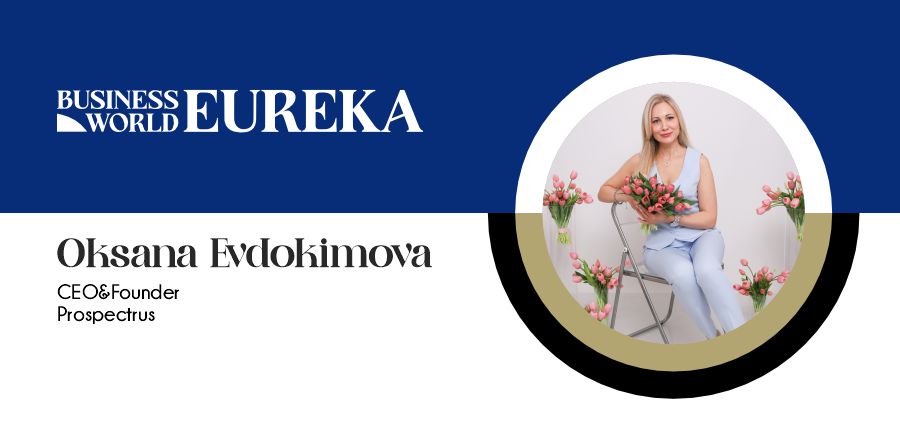
Exploring how global companies can enter and thrive in Russia by understanding culture, strategy, and local business dynamics!
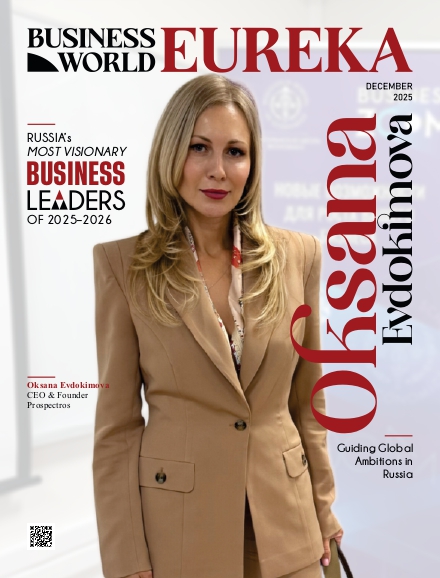
Everyone has a moment when they first imagine their future, standing on the edge of possibility, feeling both excited and unsure. For Oksana Evdokimova, that moment came during her university years in Moscow. She studied International Economic Relations, learning English and German, while Russia was opening its doors to the world. Foreign companies were coming in, and the country felt full of opportunities waiting to be explored.
Oksana dreamed of working in a multinational company in Russia, where she could use her skills, curiosity, and energy to help businesses grow. After graduating in 1998, she entered the corporate world with determination. Over the next 10 years, she focused on business development and sales, learning how to succeed in a complicated market and how to turn ideas into action.
During those years, she understood the challenges foreign companies face and the strategies that really work. She saw that many businesses wanted to enter Russia but needed guidance to move forward with confidence. This inspired her to plan the next step: to create an Execution-as-a-Service development agency that could help foreign companies enter the Russian market smoothly, guiding them through every step, turning plans into real results, and building strong local connections.
Through all this, Oksana learned that success comes from truly understanding people, culture, and the market. Her journey shows that opportunities are strongest when met with courage and clear thinking. By sharing her experience, she helps businesses find their place and grow in a world full of potential.
Let us explore Oksana’s journey and the path she is paving for global businesses in Russia.
Early Experiences Abroad and Global Business
Her global perspective began even earlier, when she had the chance to study in the United Kingdom in 1994. Seeing how businesses operated in a mature and structured environment opened her eyes to new possibilities and shaped her career ambitions. The experience helped her develop a broader understanding of different cultural and economic environments, laying the foundation for her approach to guiding companies in complex markets.
Through her marketing discipline, she visited some UK companies, felt their atmosphere, studied their culture, their approaches to the business, and she wanted so much to be a part of them. Then later when she studied at the Stockholm School of Economics, it influenced her the same way, and her goal was to develop her career in the MNC. All the professors were abroad with the foreign tools and techniques for business running.
Defining Moments in Choosing International Business
During her studies at Moscow University and later in London, Oksana experienced formative moments that reinforced her interest in foreign business cultures.
Seminars with foreign students, internships at international companies in Russia, and academic disciplines such as foreign economic activity, customs procedures, and international business all deepened her understanding. Her love for the English language and its culture grew stronger, and she dreamed of bringing that global perspective to her native country.
Navigating Cross-Cultural Business in Russia and CIS Markets
Her dream of bringing a global perspective to her native country was formed further by the rich cross-cultural environment of Russia. Within a single country, numerous ethnic groups coexist, including Russians, Tatars, Bashkirs, Chechens, and Yakuts, alongside diverse religions such as Orthodox Christianity and Islam, and distinct regional, urban, and rural subcultures.
These differences influence business approaches across Federal districts. Understanding the “cultural code” is of critical importance. One must grasp the symbolism, humor, pain points, and values of each target group.
For instance, the image of a bear may carry a positive connotation in one context while appearing stereotypical in another. The language of communication plays a significant role. Even within the Russian language, regional peculiarities and slang exist. Communicating with audiences in the Caucasus differs from interacting with residents of Siberia.
These factors present challenges due to the complexity of management and marketing, while simultaneously offering a wealth of opportunities, talents, and niches.
Building Trust Across Cultures
In global B2B sales and distribution, working with partners from different cultures requires more than expertise; it requires building trust and strong communication.
First of all, Oksana states that you must show and prove your expertise. You must be trusted as a professional. Secondly, and this is very important, you must be trusted as a partner. Gaining trust is a strategy based on consistency, transparency, and humanity. You need to be a reliable professional you can rely on, and a decent person you want to do business with.
In the long run, trust becomes the most valuable asset of your business, which reduces transaction costs, opens up new opportunities, and allows the partnership to survive any crises.
Developing Innovation Through Responsibility and Risk
The principles of building trust and demonstrating expertise become especially important when expanding foreign start-ups into Russia, a market full of challenges that test creativity and resilience. Establishing strong relationships with customers and guiding a foreign venture instills a sense of responsibility for both results and the company’s success. It feels like developing a personal business, where each achievement reflects the trust people place in the enterprise, and where every step forward reinforces the value of reliability and integrity.
This requires high levels of creative and strategic thinking, as well as introducing innovative business models into a competitive market. Launching a business in a new country involves inherent risks, which is why the business models are designed to minimize risks for customers. The team also assumes a portion of the risks as an invested partner in the project.
Bridging Global Businesses with Russia
The risk-minimizing business models and the team’s role as an invested partner become especially valuable when international companies look to enter the Russian market, where challenges range from understanding local business practices to managing operations remotely. They need guidance, support, and solutions that simplify these complexities and help them navigate the market with confidence.
Recognizing this gap, Oksana, in 2010, after graduating from the Stockholm School of Economics in General Management, decided to establish her own company. By that time, she had gained significant experience working with foreign companies and developed a deep understanding of their needs and challenges. She observed that:
To address these issues, she founded the business development agency to provide clients with solutions that offered practical relief and effective support for their international operations.
Bridging Cultural and Business Practice Gaps
In her role as a contact point for foreign export managers in Russia, Oksana deals with the challenges of bridging cultural and business practice gaps. She believes one should be well prepared and pass through the cultural Due-Diligence, which is a process of in-depth and comprehensive assessment of the cultural aspects of a company, market, or partner before making a deal, entering a new market, or starting a close collaboration.
She also stresses the importance of building trust, understanding cultural and communication styles, being flexible, searching for compromise, and always remaining patient and respectful.
Balancing Executive Management and Strategic Vision
In leadership, managing day-to-day operations often competes with the need to focus on long-term strategy and growth. Oksana is trying to be everywhere. She cannot stop doing the executive management as she should control all the projects at all their steps, and she has limited time for the visionary aspects.
Once a year, she holds a strategic session for her team where they formulate the strategy and targets for the next two to three years. Sometimes they reach them, sometimes they do not, but it is a process, and she should work on this balance.
Crafting a Sales Strategy for Diverse Markets
Entering a market as vast and diverse as Russia and the CIS requires a careful approach to distribution and regional adaptation. When a foreign company wants to enter the Russian market and penetrate it, one of the important issues is how to build the distributor network properly. It is recommended to identify and partner with distributors located in each federal district of Russia.
This approach will enable them to effectively cover the vast geographic territory and build a strong presence across the country. Every federal district should be studied from the point of its market capacity, geographical location, ethnic culture, religion, and other relevant factors. Also, the logistical issues should be taken into consideration.
Expanding Perspectives Through Entrepreneurial Ventures
Working as a partner in entrepreneurial projects across the beauty, education, and real estate sectors offers exposure to different industries and the unique challenges each presents. This experience gives Oksana the opportunity to manage ventures from an entrepreneurial angle.
And that means that she applies the entrepreneurial thinking, ability to take risks and responsibility, innovative decisions, and visionary aspects.
What Separates a Successful Business Development Leader from a Good One
In the current globalized economy, business development leaders face challenges that require vision, strategy, and strong interpersonal skills.
“It seems to me that such a person should have an entrepreneurial approach and entrepreneurial spirit. He should be a leader. There is also constant learning, self-development, the ability to establish contacts, and he should have a holistic view of the things, processes, and models. Of course, this person must be an excellent strategist and have high human values,” affirms Oksana.
The Future of Global Trade and Digital Strategies
As businesses increasingly operate across borders, the fields of import-export, digital marketing, and project management face rapid transformation, especially when considering international expansion.
Oksana believes the influence and role of Artificial Intelligence will play a significant part in this evolution. Certain functions will be handled by AI, with exim AI agents becoming prominent in the market and marketing AI agents gaining widespread popularity. She anticipates the emergence of new platforms to facilitate international cooperation, making global expansion increasingly accessible and streamlined.
Read Also – Robert Campbell